

The Mosh Huasginch Kamëntsá School
Kamëntsá Language and
Living Culture Program
An Indigenous-led revitalization program connecting language education, ancestral weaving, community research, and intergenerational transmission in the Kamëntsá Territory of Colombia.
Led by OIOC, together with Kamëntsá teachers, weavers, knowledge holders, families, and community authorities.
About the Program
A New Phase of Kamëntsá Language Revitalization
In the ancestral territory of the Kamëntsá Biyang Nation, language is inseparable from identity, territory, medicine, memory, and community life.
The Mosh Huasginch Kamëntsá School began in 2025 as a community-based language-learning initiative that brought together children, youth, and adults.
In 2026, the program entered a new phase. Language education now continues alongside an Ancestral Weaving School and a comprehensive sociolinguistic self-diagnosis involving 1,937 Kamëntsá families.
Together, these initiatives combine education, cultural practice, community research, and collective planning to bring the ancestral language back into everyday life.
A language survives when people speak it at home, practice it in the community, carry it through cultural traditions, and pass it from one generation to the next.
Our Work in 2026
One Revitalization Strategy, Three Connected Paths
Language revitalization cannot happen only inside a classroom. It requires opportunities to speak, listen, create, remember, investigate, and transmit knowledge throughout community life.
For this reason, OIOC is advancing three interconnected areas of work.
91 Enrollments
Kamëntsá Language School
A community learning space where children, youth, adults, and elders strengthen oral and written Kamëntsá through conversation, grammar, songs, stories, cultural memory, and knowledge connected to territory.
73 Enrollments
Ancestral Weaving School
An extension of the language revitalization process that teaches weaving through Kamëntsá, connecting words, instructions, symbols, colors, stories, and ancestral knowledge.
1,937 Families
Sociolinguistic Self-Diagnosis
An Indigenous-led research process designed to reach 1,937 Kamëntsá families across seven veredas. The process will establish a community-owned baseline and guide a ten-year language revitalization strategy.
Kamëntsá Language School
Strengthening the Ancestral Word
The Mosh Huasginch Kamëntsá Language School creates a community learning space where children, youth, adults, and elders can strengthen their oral and written Kamëntsá.
In 2026, the school has 91 enrollments:
-
56 participants in Level 1
-
35 participants in Level 2
Classes strengthen:
-
Everyday conversation and oral expression
-
Listening and pronunciation
-
Reading and writing
-
Kamëntsá grammar and vocabulary
-
Songs, stories, memory, and oral tradition
-
Knowledge connected to plants, territory, family, and community life
-
Confidence in speaking Kamëntsá across generations
The school welcomes both new learners and participants continuing from earlier stages of the program. This creates a progressive learning pathway rather than isolated or short-term workshops.
The ancestral word comes back to life when people have safe, meaningful spaces to speak it.


Ancestral Weaving School
Learning Kamëntsá Through the Hands
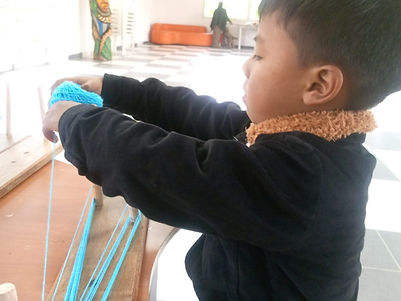
In Kamëntsá culture, weaving is a language in its own right. Colors, forms, symbols, and patterns carry memories, relationships, and teachings passed down through generations.
The Ancestral Weaving School extends the language revitalization process. Classes are taught through Kamëntsá, allowing participants to learn and practice the language while developing an ancestral art.
In 2026, the weaving school has 73 enrollments:
-
52 participants in Level 1
-
21 participants in Level 2
Participants learn weaving techniques alongside Kamëntsá words, instructions, stories, symbols, and cultural meanings.
The school also recognizes Kamëntsá women, artisans, and cultural knowledge holders as educators whose knowledge is essential to language continuity.
Through weaving, the language becomes connected to the hands, the territory, and collective memory.

Kamëntsá Sociolinguistic Self-Diagnosis
Listening to 1,937 Kamëntsá Families
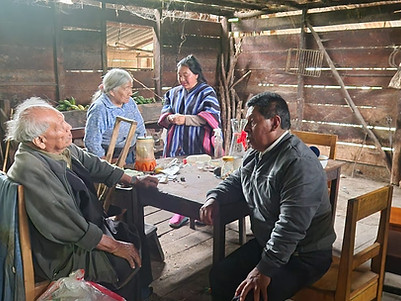
OIOC and the Kamëntsá community are conducting a comprehensive sociolinguistic self-diagnosis to reach 1,937 Kamëntsá families across seven veredas.
The six-month process began on September 1, 2026, and 14 trained Kamëntsá community fieldworkers are implementing it.
This is not an external study conducted about the community. It is an Indigenous-led, community-owned process designed to help the Kamëntsá Nation understand the current condition of its language and make informed decisions about its revitalization.
The process will produce:
-
A community-owned sociolinguistic baseline
-
A map of language use and transmission across the territory
-
Identification of barriers and opportunities within families
-
Community priorities for education and revitalization
-
Guidance for adapting teaching levels, materials, and outreach
-
A ten-year Kamëntsá language revitalization plan
The information, interpretation, priorities, and resulting decisions will remain under Kamëntsá authority.
The sociolinguistic self-diagnosis is fully funded. The current funding priority is sustaining and strengthening the Mosh Huasginch Language School.


What We’re Achieving
Building the Foundations for Long-Term Revitalization
-
164 learning enrollments across the language and weaving schools
-
91 enrollments in Kamëntsá language education
-
73 enrollments in ancestral weaving taught through Kamëntsá
-
56 Level 1 and 35 Level 2 language enrollments
-
52 Level 1 and 21 Level 2 weaving enrollments
-
Seven Kamëntsá educators and knowledge holders working across both schools
-
A sociolinguistic self-diagnosis designed to reach 1,937 families
-
Seven veredas included in the diagnostic process
-
Fourteen trained Kamëntsá community fieldworkers
-
A community-owned sociolinguistic baseline and map in development
-
A ten-year language revitalization strategy in development
Together, the schools and the self-diagnosis create a continuous cycle of listening, teaching, learning, evaluating, and planning.
Why This Matters
Language Carries an Entire Living World
When a language is weakened, a community risks losing much more than words.
Kamëntsá carries ways of understanding plants, water, health, territory, family, spirituality, reciprocity, and collective responsibility. It holds songs, stories, ceremonies, ecological knowledge, humor, and memories that cannot be fully translated into another language.
Revitalizing Kamëntsá also means strengthening:
-
Cultural continuity
-
Intergenerational relationships
-
Indigenous identity and belonging
-
Protection of ancestral knowledge
-
Territorial and ecological care
-
Community confidence and participation
-
The authority of Kamëntsá teachers and knowledge holders
-
Preparation for future generations
The extinction of a language is like the extinction of a plant or animal— each carries wisdom essential to life
TAITA JUAN BAUTISTA AGREDA
The Future of the Program
From Community Education to a Long-Term Language Strategy
The 2026 process will help OIOC and the Kamëntsá Nation develop a long-term revitalization strategy grounded in reliable community information.
The next phase will focus on:
-
Expanding language learning to more families and veredas
-
Creating learning pathways for different ages and proficiency levels
-
Supporting Kamëntsá teachers, weavers, and cultural knowledge holders
-
Developing culturally relevant teaching materials
-
Strengthening the use of Kamëntsá within the home
-
Connecting language with weaving, plants, music, stories, and territory
-
Creating safe spaces for children and young people to speak
-
Monitoring changes in language use over time
-
Returning the diagnostic findings to participating communities
-
Building a sustainable Indigenous-led model for future generations
Our Indigenous Leadership Team

Taita Juan Bautista Agreda
Taita Juan Bautista Ágreda is a Kamëntsá elder, respected Yagé knowledge holder, and four-time Governor of the Kamëntsá Nation.
With more than 40 years of experience as a spiritual and community leader, he serves as Director of OIOC and guides the language revitalization process with cultural integrity and a long-term vision.
His leadership keeps the program rooted in Kamëntsá authority, community responsibility, ancestral knowledge, and care for future generations.

Andrés Juagibioy
Andrés Juagibioy has more than 30 years of experience strengthening and teaching Kamëntsá.
At OIOC, he serves as a teacher and lead community researcher, documenting the living language through oral traditions, ecological knowledge, stories, and community memory.
His work connects language education with the knowledge carried by elders, families, plants, and territory.

Juana María Muchachasoy
Juana María Muchachasoy has dedicated decades to teaching and protecting the Kamëntsá language.
Her experience includes early childhood education, community leadership, and intergenerational cultural transmission. She teaches oral and written Kamëntsá and helps children and young people strengthen their identity through the ancestral word.

Gladis Alicia Chindoy Chicunque
Gladis Alicia Chindoy Chicunque has more than 25 years of experience teaching and preserving Kamëntsá.
She is especially committed to working with children and creating opportunities for intergenerational language transmission. At OIOC, she serves as a language teacher and cultural guide.

Antonia Narváez
Antonia Narváez is a Kamëntsá communicator and researcher who documents ancestral ways of life.
She supports the revitalization process through oral history, cultural research, community storytelling, and documentation. Her work helps preserve elders' voices and the everyday practices through which Kamëntsá knowledge is transmitted.

Luis Antonio Buesaquillo Agreda
Luis Antonio Buesaquillo Ágreda is a Kamëntsá language teacher, cultural organizer, and educational materials developer.
He has participated in community schools, bilingual institutions, and cultural initiatives. His work supports the development of grammar, writing, vocabulary, and practical resources for Kamëntsá learners.

2026
Impact Numbers
164
Learning enrollments across both schools
1,937
Families within the scope of the sociolinguistic self-diagnosis
91
Kamëntsá language enrollments
14
Trained Kamëntsá community fieldworkers
73
Ancestral Weaving Enrollments
7
Veredas included in the diagnostic process
7
Kamëntsá educators and knowledge holders
Current Funding Priority
Sustain the Mosh Huasginch Language School for One Full Year
The sociolinguistic self-diagnosis is fully funded. OIOC’s current partnership priority is the continuity and strengthening of the Mosh Huasginch Language School.
The school keeps language transmission active while the community develops the evidence and long-term strategy needed to guide future revitalization.
COP $16,400,000
Monthly school operations and teaching continuity
COP $98,400,000
Six months of school continuity
COP $196,800,000
One full year of school continuity
Partners may support one or more months of the school, underwrite a full year, or explore a multi-year partnership aligned with the ten-year revitalization strategy.
International partners may contact OIOC for current USD equivalents and partnership information.
What Partnership Makes Possible
Your support helps:
-
Keep Kamëntsá teachers, learners, and community learning spaces active
-
Provide fair and sustained compensation for Indigenous educators
-
Maintain regular language classes throughout the year
-
Develop culturally grounded teaching materials
-
Adapt teaching levels and methods as community findings emerge
-
Strengthen intergenerational learning and everyday language use
-
Connect immediate language transmission with a ten-year territorial strategy
-
Sustain a process designed, implemented, evaluated, and governed within Kamëntsá territory
We are not seeking funding to begin revitalization. We are seeking partners to sustain and strengthen a process already led, tested, and growing within Kamëntsá territory.
Support Kamëntsá Language Revitalization
Help Keep the Ancestral Word Alive
Your contribution supports an Indigenous-led process connecting language, culture, territory, and future generations.
Donations help provide:
-
Fair compensation for Kamëntsá language teachers and knowledge holders
-
Regular language classes throughout the year
-
Culturally relevant educational materials
-
Transportation and access for participating learners
-
Intergenerational language-learning activities
Every contribution helps ensure that Kamëntsá remains present in the voices, hands, homes, and future of the community.


Newsletter & Updates
Receive stories, community updates, and progress from the Kamëntsá Language and Living Culture Program.
Follow the journey of the teachers, weavers, researchers, families, and students working together to keep Kamëntsá alive.

Trusted & Vetted Organizations
.png)


.png)